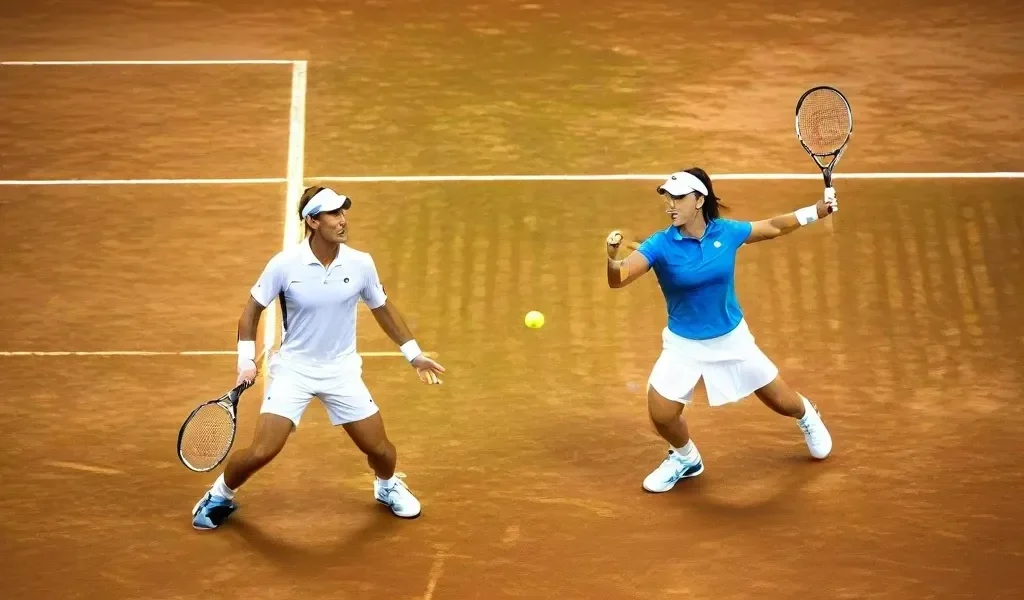
Doubles tennis, especially at a Grand Slam like the Australian Open, consistently delivers a brand of drama and excitement that’s uniquely its own. Forget meticulously crafted rankings and pre-tournament predictions because, on the doubles court, anything can happen. It’s a thrilling blend of strategy, teamwork, and sheer grit where underdogs frequently rise to the occasion, etching their names into tennis lore with unexpected upsets.
The Australian Open has witnessed its fair share of these captivating moments. From wildcards stunning top seeds to unlikely pairings finding their rhythm and dismantling established duos, the tournament is a breeding ground for surprises. These aren’t just random occurrences; they’re a testament to the depth of talent in doubles tennis and the unpredictable nature of head-to-head competition. The recent Australian Open was no exception, delivering several unforgettable upsets that had fans on the edge of their seats. Honestly, witnessing these unexpected twists and turns is one of the most compelling aspects of following the sport. They remind us that passion, determination, and a little bit of magic can trump even the most formidable opponents.
Notable Australian Open Doubles Upsets: A Deep Dive
The Australian Open, a Grand Slam known for its scorching heat and unpredictable matchups, has witnessed its share of shocking doubles upsets. These moments, where underdogs defy the odds and topple top-seeded opponents, are etched in tennis history, fueling the dreams of aspiring players and reminding us that anything is possible on the court. As someone immersed in the world of sports, these upsets are more than just scores; they’re stories of resilience, strategy, and the unwavering belief in oneself.
Let’s rewind to the*2007 Australian Open Mixed Doubles**. The final saw Elena Likhovtseva and Daniel Nestor against Victoria Azarenka and Max Mirnyi. While Likhovtseva and Nestor were seasoned players, Azarenka and Mirnyi, with their raw power and aggressive net play, were considered the favorites due to their momentum. However, Likhovtseva and Nestor’s tactical brilliance and unwavering composure saw them secure a 6–4, 6–4 victory. Analyzing the match later, it became clear that their ability to neutralize Azarenka’s power and exploit Mirnyi’s occasional lapses in concentration proved decisive. It taught me that even in doubles, individual match-ups and the ability to adapt your game are critical.
Fast forward to the*2015 Australian Open Mixed Doubles**, where Martina Hingis and Leander Paes clashed with defending champions Kristina Mladenovic and Daniel Nestor in the final. Hingis, returning from retirement, and Paes, a veteran of the doubles game, were a new pairing. Mladenovic and Nestor, established champions, held the edge on paper. Yet, Hingis and Paes showcased incredible chemistry and court awareness, dismantling their opponents 6–4, 6–3. The key turning point was Hingis’s ability to dominate the net, complemented by Paes’s relentless pressure on Nestor’s serve. This victory, filled me with excitement, highlighting the power of experience and adaptability in high-pressure situations. It’s a reminder that a fresh perspective can sometimes outperform established dominance.
Another unforgettable upset occurred during the*2024 Australian Open Mixed Doubles**, where Hsieh Su-wei and Jan Zieliński faced Desirae Krawczyk and Neal Skupski in the final. Krawczyk and Skupski, a well-oiled machine, were heavily favored, especially with Krawczyk chasing a career Grand Slam in mixed doubles. However, Hsieh and Zieliński, displaying nerves of steel, clinched the title in a nail-biting 6–7(5–7), 6–4, [11–9] victory, saving a championship point in the process. Zieliński becoming the first Polish champion and finalist at the event added another layer of excitement to this match. This taught, the importance of mental fortitude and the ability to seize crucial moments. The match was a rollercoaster. The underdogs refused to crumble under pressure.
These Australian Open doubles upsets are more than just sporting anecdotes. They encapsulate the essence of competition, the unpredictable nature of tennis, and the enduring appeal of the underdog story. They are moments that stay with you, sparking conversation and igniting the passion for the game. Each victory, against the odds, reinforces the lesson that preparation, strategy, and unwavering self-belief can triumph over perceived limitations. It’s what makes the Australian Open, and indeed all of sports, so captivating.
Understanding the Dynamics of Doubles Upsets
Doubles tennis distinguishes itself sharply from its singles counterpart, especially when it comes to upsets. In singles, a stellar individual performance can often overpower a higher-ranked player. However, in doubles, the blend of teamwork, strategy, and communication overshadows individual skill. This introduces a unique dynamic where a team’s synergy—or lack thereof—can dictate outcomes far more significantly than relative skill levels suggest. Doubles strategy hinges on court coverage, anticipation, and seamless transitions between partners. A team may feature two individually weaker players, but their tight coordination and mutual understanding can surprisingly overcome a pair of higher-ranked stars who lack cohesive play. The mental approach within doubles accentuates this, as positivity and encouragement between partners can elevate performance, while tension or miscommunication can rapidly dismantle a team’s chances, paving the way for unexpected upsets.
Factors that Increase the Likelihood of Upsets
Several situational factors can further tip the scales in favor of a doubles upset. Playing in front of a boisterous home crowd can infuse a team with extra energy and determination, disrupting the composure of the favorites. Team cohesion plays an outsized role; long-standing partnerships often possess an almost telepathic understanding, a significant advantage over newly formed teams still ironing out their strategies and communication. Moreover, the early rounds of tournaments, or even the finals, can be ripe for upsets as pressure mounts. These high-stakes environments test team resolve, and a team’s collective mentality becomes crucial. A perceived mismatch in talent can become irrelevant when cohesion, determination, and mental fortitude come into play, highlighting that in doubles, the whole truly can be greater than the sum of its parts.

Analyzing the Underdog Advantage: Tactics and Techniques
In the realm of competitive sports, the underdog often pulls off surprising victories by employing a variety of tactics and techniques that disrupt conventional strategies. These methods, while sometimes risky, can create enough chaos and uncertainty to unsettle even the most dominant opponents. This section explores some of these strategies, highlighting their benefits and potential pitfalls.
One such tactic is the strategic manipulation of formations. The I-formation, borrowed from football, involves aligning players in a way that obscures their intentions, forcing the receiving team to guess and potentially make errors. The Bryan brothers, famous for their tennis doubles strategy, used the I-Formation for decades. This formation’s effectiveness lies in its ability to create indecision. However, using the I-formation comes with risks. Executing the formation improperly can leave gaps in coverage, creating easy opportunities for opponents, and setting up easy scores. It demands clear communication and synchronized movement.
Poaching, a term from pickleball, involves a player aggressively moving into their partner’s area to intercept a shot. When well-timed, poaching puts pressure on the opposing team, leading to quick points. There are two types of poaching, planned and opportunistic poaching, with the former often done from the receiving team after the return of serve. The key is to not telegraph this movement before the hitter commits to the shot. However, if the poach is anticipated, it can leave the original side of the court vulnerable. This tactic requires trust and coordination between partners, with the non-poaching player ready to cover the exposed area.
Another subtle, but effective technique involves varying the tempo of the game. Changing the speed and rhythm of shots can disrupt the opponent’s comfort zone, leading to mistakes. This could mean mixing soft dinks with aggressive power shots in pickleball or varying the spin and speed of serves in tennis. Much like a baseball switch-hitter who changes from one side of the plate to the other, this unpredictability can keep opponents off-balance, creating opportunities for the underdog to capitalize. This chess-like strategy can unsettle even seasoned players, turning their experience against them.
Identifying Potential Upsets: What to Watch For
Spotting an upset before it happens is the holy grail of sports analysis. It’s about looking beyond the surface, diving into the numbers, and understanding the subtle dynamics that can shift the balance. Forget simply glancing at win/loss records; that’s just the starting point. Real potential lies in dissecting a team’s performance indicators.
Begin with statistical analysis. Examine recent match results with a critical eye. How convincing were the wins? Were they scraping by or dominating? What’s their form looking like in the past few games? Then, dig into head-to-head records, if available. Historical data can reveal surprising trends – some teams just match up poorly against others, regardless of overall ranking. Also, consider how a team performs against opponents with similar styles and strengths. A team might crush weaker opponents but struggle against equally matched teams.
Finding this data is easier than you might think. Sports news outlets and statistics websites are treasure troves of information. Many of these websites offer in-depth stats and analysis, often for free or with a reasonable subscription fee.
Analyzing team cohesion is a bit more subjective but crucial. Look for tells in press conferences, social media posts, and even on-field body language. Are players supporting each other, or are there simmering tensions? Strong team cohesion can elevate a team beyond its individual talent. Unusual pairings can also create unpredictable dynamics; a new coach implementing a radical strategy, or the sudden insertion of a young, hungry player into the lineup can disrupt established norms and throw off opponents.
Everyone has their favorite and least favorite team archetypes. Perhaps you favor gritty, defensive-minded teams that excel at stifling high-scoring offenses. Or maybe you’re wary of teams that rely heavily on one or two star players, as their entire performance can depend on the hot hand of just one person.

Case Studies in Preparation and Mental Fortitude
Mental preparation is about more than just visualizing success; it’s about crafting a detailed plan of action for various in-match scenarios. Elite tennis players don’t just hope for the best; they anticipate challenges and preemptively develop solutions. This involves deep dives into opponent tendencies, meticulously planning tactical adjustments, and rehearsing responses to high-pressure situations.
Visualization, when coupled with strategic planning, becomes a potent tool. It is common to see players mentally walk themselves through critical points, picturing not only their winning shots but also their reactions to setbacks. They simulate the feelings of pressure and fatigue, and then visualize themselves overcoming those obstacles with composure and tactical precision.
Confidence stems from rigorous preparation. If a player has exhaustively prepared, they step onto the court with a quiet assurance, knowing they’ve left no stone unturned. A positive mindset isn’t about ignoring the possibility of failure; it’s about believing in their ability to execute their game plan, even when things get tough. Emotional control is the final piece of the puzzle. Top players aren’t immune to frustration or nerves, but they’ve developed strategies to manage those emotions.
Mental fortitude is the unwavering commitment to their process, regardless of the score. They stay present, focused on each point, and trust that their preparation will guide them through. It’s about embracing the challenge, relishing the opportunity to compete, and knowing that even in defeat, they’ll emerge stronger and more prepared for the next battle.
Conclusion: Embracing the Unpredictability and the Lessons Learned
The 2026 Australian Open doubles tournament served up a thrilling mix of upsets and unexpected victories, proving once again that in tennis, nothing is ever truly certain. From the early exit of reigning champions in the women’s doubles to the remarkable repeat victory in mixed doubles, Melbourne Park was full of surprises.
Key takeaways from this year’s tournament include the importance of adaptability, the power of teamwork, and the constant potential for underdogs to rise to the occasion. The victories of teams like Gadecki and Peers in mixed doubles, and Mertens and Zhang in women’s doubles shows how important it is to handle pressure and keep fighting even when the momentum seems to be swinging the other way.
The excitement of doubles tennis lies in this very unpredictability. As fans, embracing this chaos allows a deeper appreciation for the strategic nuances and the incredible athleticism on display. The 2026 Australian Open has provided lots of exciting moments and valuable lessons, making everyone smarter and more excited for the doubles action to come.